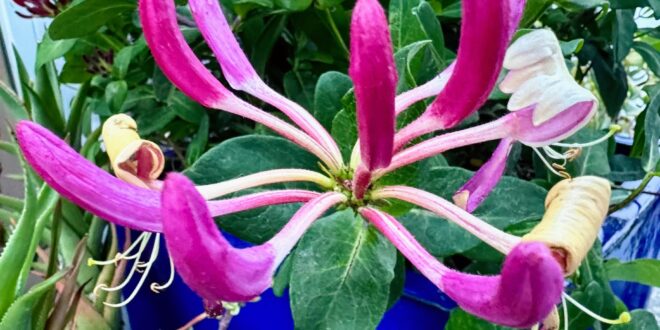

Looking for a stunning climber that delights both your eyes and your nose? Meet the Peaches and Cream Honeysuckle (Lonicera periclymenum ‘Inov86’). This spectacular vine is a showstopper, famous for its dramatic color changes and intoxicating fragrance.
Unlike aggressive exotic varieties, this well-behaved compact cultivar offers all the charm of traditional honeysuckle without taking over your entire yard.
Why You’ll Fall in Love with This Vine
- Stunning Blooms: Deep magenta buds open into soft cream and pastel pink flowers.
- Intense Fragrance: Releases a rich, sweet perfume that peaks during warm summer evenings.
- Wildlife Magnet: Actively draws in hummingbirds, butterflies, and essential pollinators.
- Compact Growth: Reaches a manageable 5 to 8 feet tall, making it perfect for small spaces.
- Long Season: Flushes heavily in spring and continues blooming right through summer.
Perfect Growing Conditions
To get the most vibrant colors and healthiest growth, give your honeysuckle the right start:
Sun Exposure
Plant in full sun to partial shade. While it tolerates partial shade, you will get the maximum number of flowers and the brightest pink hues if it receives at least 6 hours of direct sunlight daily.
Soil Preferences
This vine loves rich, well-draining soil. It prefers a neutral to slightly acidic pH. Ground moisture is key, so mix in compost at planting time to help retain water without letting the roots sit in soggy mud.
Climate and Hardiness
Peaches and Cream is incredibly resilient. It thrives across USDA Hardiness Zones 4 through 9, meaning it handles freezing northern winters just as well as warm southern summers.
Essential Care Tips
1. Support and Training
While more compact than other honeysuckles, it still needs a physical structure to climb. Secure it to a trellis, arbor, fence, or obelisk. Use soft plant ties to gently guide the young vines upward.
2. Watering Routine
Water deeply once or twice a week during the first growing season to establish a deep root system. Once mature, it is moderately drought-tolerant, but it flowers best with consistent moisture.
3. Mulching
Keep the “feet” of your vine cool. Apply a 2- to 3-inch layer of organic mulch around the base of the plant. This locks in moisture and mimics the forest-floor environment honeysuckles naturally love.
4. Pruning and Maintenance
Always prune immediately after the main spring flowering flush. Because it blooms on both old wood (last year’s growth) and new wood, early summer pruning ensures you don’t cut off next spring’s flower buds. Clear out dead or tangled stems to improve airflow.