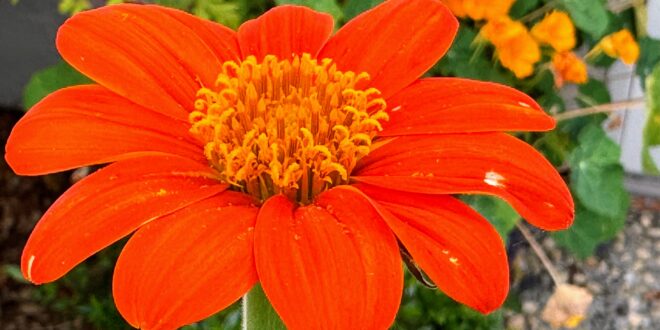

Tithonia, commonly known as the Mexican sunflower, is a powerhouse annual that rewards high-heat summer gardens with blazing orange-red blooms and an unmatched parade of pollinators.
If your summer landscape is flagging under the afternoon heat and you need a high-impact plant that scoffs at drought, look no further than Tithonia rotundifolia. Growing anywhere from 3 to 8 feet tall depending on the variety, this member of the Asteraceae family creates a dramatic statement at the back of any border.
Why You Need Tithonia in Your Yard
- Pollinator Magnet: Monarchs, swallowtails, bumblebees, and hummingbirds will flock to your yard. Tithonia often outcompetes traditional butterfly bushes for sheer insect traffic.
- Drought and Heat Defiance: Native to Mexico and Central America, these heat-lovers thrive when other plants wither and demand minimal water once established.
- Thrives on Neglect: Unlike heavy feeders that demand rich compost, Tithonia prefers poor to average, well-draining soil. Too much rich soil or nitrogen fertilizer leads to weak, floppy stems and fewer flowers.
- Fantastic Cut Flowers: The brilliant, velvety blooms make striking additions to summer arrangements, provided you handle the hollow stems with care.
Growing Tithonia from Seed
You can direct-sow seeds after all danger of frost has passed and nighttime temperatures reliably climb above 60°F. However, starting them indoors about 6 weeks before your last spring frost gives you a jump on the season.
Keep this crucial rule in mind: Tithonia seeds require light to germinate. Do not cover them with soil. Simply sprinkle them over a moist, bright surface, press them gently into the media, and provide a warm, sunny indoor spot or grow lights. If starting indoors, use individual peat pots or roomy 4-inch containers because young seedlings hate root disturbance.
Essential Care and Maintenance
- Location: Choose a spot receiving at least 6 to 8 hours of direct sun daily.
- Support: Because standard varieties like ‘Torch‘ grow tall and feature hollow, slightly brittle stems, site them near a fence, wall, or stake them to prevent heavy summer winds from toppling them.
- Pinching and Pruning: When your plants reach about 12 to 18 inches tall, pinch back the center tip to encourage heavy side-branching, resulting in a bushier, sturdier plant.
- Deadheading: Snip off spent flower stalks just above a leaf node to keep the color pumping straight through the autumn frost.
If you want a more compact fit for smaller spaces or containers, look for dwarf cultivars like ‘Fiesta del Sol‘ or ‘Goldfinger’ which top out at a manageable 2.5 to 3 feet.
When growing Tithonia in container gardens within USDA Hardiness Zone 8b, selecting the right companions requires matching plants that thrive in lean, well-draining soil and baking, all-day sun.
Because standard Mexican sunflowers can overwhelm a container, it is best to stick to compact varieties like ‘Fiesta del Sol’ or ‘Goldfinger’ (which max out at 2 to 3 feet) as your central “thrillers”. From there, you can design stunning potted arrangements using low-maintenance “fillers” and cascading “spillers” that can handle the exact same drought-tolerant conditions.
The Perfect Dynamic Fillers (Mid-Pot Balance)
These plants fill out the middle of your container, hiding the lower, coarse stems of the Tithonia while offering a beautiful texture and color contrast.
Zinnias (Dwarf Varieties): The Mix: Zinnias pick up on Tithonia’s vibrant, hot-toned heat with matching daisy-like shapes.
Key Specs: Opt for compact types like the Zinnia angustifolia (Linearis) or the ‘Profusion’ series, which naturally stay under 12–15 inches and won’t crowd the pot.
Blue Salvia (Salvia farinacea): The Mix: Provides an essential color wheel contrast. The cool purple-blue spikes create an intense visual pop against the fiery orange-red of the sunflower.
Key Specs: Varieties like ‘Evolution’ or ‘Victoria Blue’ love lean soil and baking sun, matching Tithonia’s care perfectly.
French Marigolds (Tagetes patula): The Mix: Adds dense, feathery foliage to counter Tithonia’s larger, coarse leaves.
Key Specs: Stays compact at 6–12 inches, acts as a natural pest deterrent, and blooms continuously alongside your sunflower.
The Best Cascading Spillers (Trailing Edges)
These companions soften the edges of your pots, trailing elegantly over the rim to create a lush, multi-tiered container design.
Portulaca (Moss Rose): The Mix: Portulaca is the ultimate hot-weather companion because it stores water in its succulent leaves.
Key Specs: Low-growing, multi-colored blooms that trail over pot edges and genuinely thrive on dry, un-amended soil.
Million Bells (Calibrachoa): The Mix: Offers a massive explosion of mini petunia-like faces that cushion the base of the container.
Key Specs: Look for deep purples or striking yellows to complement the central orange tones. Requires sharp drainage.
Sweet Alyssum (Lobularia maritima): The Mix: Forms a dense, honey-scented carpet of tiny white or lavender flowers that drape over the container sides.
Key Specs: Acts as a living mulch to shade the soil surface slightly while drawing in beneficial predatory insects like hoverflies.
Container Combinations to Avoid
When planting in tight quarters like a pot, avoid pairing Tithonia with Cucumbers or Basil. Tithonia exhibits minor allelopathic traits, meaning its root system releases natural compounds that can actively stunt or sicken these specific neighbors when their roots are forced to mingle.
Pro-Tip for Potted Tithonia
Always use a heavy, breathable terra-cotta or unglazed clay pot that is at least 12–14 inches in diameter (about 5 gallons). Clay pots naturally pull excess moisture away from the roots and prevent the soil from overheating during peak Zone 8b summer afternoons.