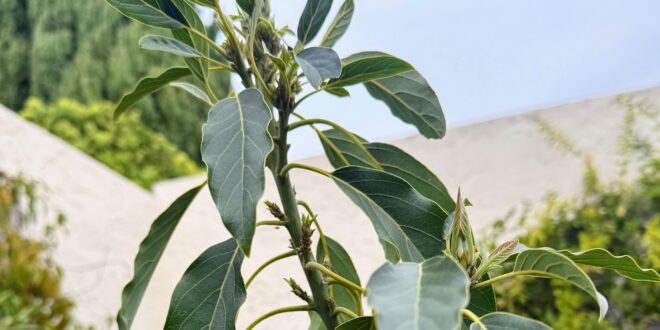

Have you ever dreamed of harvesting creamy, homegrown avocados right from your back patio, but assumed you lacked space? Enter the Little Cado avocado tree (also known as the Wurtz avocado), a genetically dwarf variety that makes container avocado gardening a reality.
Unlike standard avocado trees that can tower over 30 feet tall, the Little Cado is a true dwarf hybrid that naturally reaches a manageable 8 to 10 feet tall in the ground and stays even more compact—around 6 to 8 feet—when grown in a pot. Its dense, weeping umbrella-like shape makes it a gorgeous addition to small yards, balconies, and sunny patios. Even better, it is a self-pollinating Type A variety, meaning you only need one single tree to get a solid harvest of buttery, green-skinned fruit.
Harvest Season is May to September
History of the Little Cado
The Little Cado avocado tree has a unique origin, beginning as a chance seedling in Encinitas, California. Horticulturist Roy Wertz first planted the seed during the 1930s, and the distinct variety was formally introduced 1948. Over the decades, nurseries and growers have sold it under various names, including minicado, wurtz, and Wertz.
Nobody planned the crossbreeding that created it. The tree emerged as a hybrid, combining genetic traits from both mexican and guatemalan avocado varieties. Unlike standard cultivars that grow into massive shade trees, this specimen naturally mutated into a true-dwarf avocado. Early nursery operators quickly noticed its characteristic weeping, umbrella-shaped growth habit and marketed it specifically for urban yards, which is how home gardeners first came to recognize its value.
As a self-pollinating tree, it functions as a Type A cultivar. Avocado flowers open and close in a distinct daily rhythm, splitting varieties into Type A and Type B categories based on whether female or male organs mature first. While individual flowers can pollinate themselves to set an initial crop, having a compatible neighbor nearby often enhances overall yields.
Here is how to set up your potted Little Cado for long-term success.
1. Choose the Right Container
Avocados have sensitive, shallow root systems that absolutely despise sitting in stagnant water.
- Starting Size: If you bought a young tree online or from a local nursery, start it in a 5-gallon to 10-gallon container. Avoid throwing a small sapling straight into a massive pot, as excess soil holds onto too much water and triggers root rot.
- The Final Destination: As your tree matures, gradually step it up to a large 15-gallon nursery pot, and eventually a 30- to 50-gallon half-barrel container to encourage heavy fruit production.
- Drainage is Key: Ensure your chosen container has multiple drainage holes. As a great tip from the Reddit avocado community, if your container only features a single hole, take a drill and add a few more to prevent water pooling at the bottom. Unglazed terra cotta or breathable fabric pots are excellent choices because they keep roots cool and help water evaporate evenly.
2. Craft a Perfectly Aerated Soil Mix
Avocado trees require incredibly well-draining, lightweight, and aerated soil. Heavy backyard clay or standard, dense potting soils will suffocate the roots.
- The Formula: Use a high-quality citrus, palm, and cactus potting mix as your base. Blend in plenty of perlite or coarse sand to increase aeration and mix in organic compost or earthworm castings to build up rich nutrients.
- Protect the Trunk: When planting, ensure the graft union stays well above the soil line. For an added layer of protection against trunk rot, layer a high-quality micro bark mulch across the surface of the soil, making sure the mulch does not directly touch the wood of the tree trunk.
3. Sun and Water Strategy
- Sunlight Requirements: Give your Little Cado prime real estate on your patio. It thrives in warm, sunny conditions and requires at least 6 to 8 hours of direct daily sunlight to photosynthesize and produce fruit.
- Watering Rules: Keep the soil consistently moist but never soggy. The best rule of thumb is to let the top 2 to 3 inches of soil dry out completely before giving it a deep, thorough watering. If the leaves begin to drop or turn yellow, double-check your drainage immediately.
4. Feeding and Winter Protection
Because frequent watering leaches nutrients out of containers, your potted avocado will need regular feeding. Apply an organic citrus or avocado fruit fertilizer (7-3-3) high in nitrogen during the active spring and summer growing seasons.
If you live in an area prone to winter freezes, container gardening gives you a huge advantage. While the Little Cado handles cold better than some tropical varieties, it still prefers USDA Hardiness Zones 9–11. If a frost is on the forecast, simply wheel your potted tree into a greenhouse, garage, or indoors near a sunny window until the threat passes.
Our tree came from Four Winds Growers purchased at Summer Winds Nursery in Cupertino


