admin

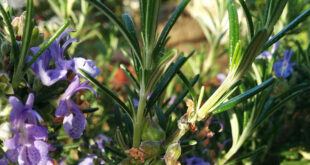
Rosemary

Rosemary is one of those wonderful herbs that makes a beautiful ornamental plant as well as a welcome culinary seasoning. Its Latin name, Rosmarinus officinalis , means “dew of the sea” and rosemary is most closely associated with the cooking of the Mediterranean area. However you don’t need perfect sunshine, sea mist or even a never ending summer to successfully …

Read More »

Olive-Anchovy-Capers Tapenade

The photo does not do justify to this olive-anchovy-capers tapenade. I used Mission olives that I harvested from my folk’s backyard and then cured at home.The olives were still tasty and not deadly. From seriouseats.com: Tapenade is named after capers, called tapeno in Provençal, a remnant of the fact that they once shared equal status with the olives. Truth is, …

Read More »

Globe Amaranth

Globe amaranth is a compact annual that typically grows 12-24” tall on upright branching stems. The true flowers are insignificant, tiny, white to yellow trumpets that are only visible close up. It is the bright magenta bracts arranged in globose, papery-textured, clover-like flowerheads that provide the real show in a long summer to frost bloom. Cultivars expand the range of …

Read More »

Hebe Speciosa

Hebe speciosa, its many cultivars and hybrids are very popular garden plants in area with suitably mild temperate climates. They appeal because of their lush evergreen foliage, showy flowerheads, long blooming season and ease of cultivation. They are used to form borders, low hedges, bushes and potted patios for patios and terraces. They are ideal for coastal gardens due to …

Read More »

Violas

All Pansies are Violas but not all Violas are Pansies.  The two words have become virtually interchangeable, but even though these plants share common origin, there are some differences that could determine which would make the most impact in your property’s landscaping. If the flower has four petals pointing upward and only one pointing downward – you’re looking at a …

Read More »

Oleander Aphids

Anyone who raises milkweed in an effort to attract Monarch butterflies is familiar with the soft-bodied, squishy orange insects that seemingly take over anything in the Asclepias family. Before we explore how to kill them, let’s take a look at the interesting life cycle of these ubiquitous, annoying insects, known as oleander aphids, milkweed aphids, or by their Latin name, …

Read More »

Gerbera Daisy

New to our Sunnyvale garden in 2020 are Gerbera daisy flowers. The blooms are large (4 inches across) and have a central disk that can be yellowish, light-bronze, or dark in color. This disk is surrounded by rays that come in a variety of colors. The colors are most commonly yellow, red, or orange. However, growers have also produced varieties …

Read More »

Violetto Artichoke Plant

From the north of Italy, the artichoke of aristocrats. This choke has small oval slightly elongated head 3 inches wide by 5 inches long. mouthwatering flavor. Fruit is more elongated than the green globe type. The edible thistle first appeared in Italy and Sicily as early as 200-300 B.C. It may be a descendant of C. cardunculus, the wild cardoon …

Read More »

Dried Hachiya Persimmons

During our Thanksgiving dinner at Shauna’s home, Linda and Brad mentioned that they had a lot of persimmons. I joked that they would ring our doorbell and leave a box of fruit. Linda corrected me: She wouldn’t ring the doorbell. They left us a box with 36 large Hachiya persimmons. Dehydrating persimmons is simple. Wash the fruit. Core the top …

Read More »

Yarrow

Yarrow (Achillea spp.) adds bright spots of color to the garden in summer and fall. My mother has always had the tall yellow yarrow in her Almaden Valley garden. It complemented the blue and white flowers of Mexican Sage. The flower heads are large, flat-topped umbels packed with tiny flowers. This hardy, drought-resistant perennial still thrives with poor soil and …

Read More »