admin

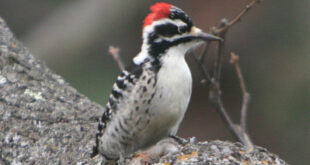
Nuttall’s Woodpecker

California’s oak woodlands are the place to look for Nuttall’s Woodpeckers. If you find an oak tree in California, even in suburban areas, there’s a chance that a Nuttall’s Woodpecker will be around. These small woodpeckers don’t just forage on trunks and branches, they also forage on tiny stems in willows and alders where they might look more like a …

Read More »

Tomato Hornworm

tomato horn worm

The five-spotted hawkmoth (Manduca quinquemaculata) is a brown and gray hawk moth of the Sphingidae family. The caterpillar, often referred to as the tomato hornworm, can be a major pest in gardens.

Read More »

Acidify Your Soil for Blueberries

Reposting of article from HomeGuides.SFGate.com. They have additional articles on this topic. Blueberries are known for their love of acidic soils, preferring a pH level of 4.8 to 5.5. If you’re discouraged from growing blueberries because of chalky or alkaline soil, take heart. Your soil can be altered both before and after planting to create and maintain the low pH …

Read More »

Raised Beds

Raised beds provide the same advantages as container pots but for less cost. The primary disadvantage is you can’t move it. Both raised beds and pots give you at least a foot-depth of loose soil with good drainage. It is easier to have denser plantings because you do not use rows. See This Old House’s video on Raised Beds.

Read More »

Blackberry

Blackberries are one of the easiest fruits to grow at home. They are a native species to the United States and grow as a small shrub or trailing vine. The fruit from this plant can be used for table fruit, syrup, jams and jelly. How to Plant, Care, Prune and Harvest Blackberry Bushes Blackberries are produced on the canes of …

Read More »

Asian Pear

Asian pear (aka Chinese, Japanese, Oriental, sand and apple pear). They are not apples. There are several differences between Asian pears and the more common European pear. Asian pears reach optimum quality when allowed to ripen on the tree, similar to apples and peaches. European pears are usually harvested in a green stage and allowed to ripen at room temperature. …

Read More »

Chile – Bhut Jolokia

The Bhut Jolokia (aka Ghost pepper) is one of the world’s hottest chili peppers. From seed planting to harvest, it takes roughly 160 days for the “Bhut Jolokia” plant to produce mature peppers. Starting seeds indoors 8 to 10 weeks prior to consistent outdoor temperatures of 70 degrees Fahrenheit or warmer will produce starts ready for transplant into the garden …

Read More »

English Daisy

English Daisies look like tiny daisies. Technically a perennial, English daisy is usually best treated as a biennial (it takes two years to bloom and then dies in the fall) in the South and an annual in the North. Plants survive down to about 10 degrees F so they can be planted in the fall in the South for early-spring …

Read More »

Chile – Black Pearl

Black Pearl Chile. Originally from Mexico. When fully grown the Black Pearl Plant looks great, purple to dark leaves and fruits turning from shiny black to red when fully ripped. The plant is normally fairly low maintenance and is normally quite easy to grow, as long as a level of basic care is provided throughout the year. Being aware of …

Read More »

Tomato – Violet Jasper

Violet Jasper is a unique cultivar from China. First offered at Seed Savers 2009 Yearbook by Hristo Hristov of Bulgaria as Tzi Bi U. Produces large, sturdy, regular leaf plants that yields clusters of jewel-like, 1-3 oz., smooth, purplish-red tomatoes with iridescent green streaks and a dark-purple red flesh. Fruit starts out with darker green stripes on typical unripe tomato …

Read More »