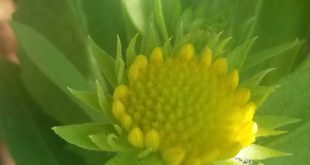
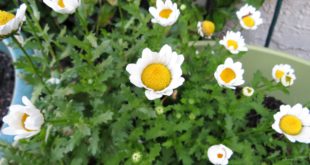
Feverfew (Tanacetum parthenium) is an attractive landscape plant with masses of one-inch, white, daisy-like flowers with large yellow centers rise on spindly stems above parsley-like leaves. The plant grows anywhere from eight to 24 inches tall and wide. This member of the aster family behaves like an annual in cooler zones, a perennial in some areas, and can be evergreen …
Read More »admin
Ladybugs
Ladybugs and Ladybug larvae are beneficial insects for your garden because they eat aphids. Ladybugs are known by several other names: lady beetles, ladybug beetles, and ladybird beetles. Regardless of what you call them, these beetles belong to the family Coccinellidae. All ladybugs progress through a four-stage life cycle known as complete metamorphosis. Embryonic Stage (Eggs) The ladybug life cycle …
Read More »March in our Sunnyvale garden 2020
Our Sunnyvale garden in March 2020 was filled with flowers. Spring blossoms on the crabapple, plum, apricot, and orange, lemon, lime, and nectarine trees. Spring bulbs like Crocus, Columbine, Sweet Kate, Scilla, Freesias, Grape-Hyacinth, Hyacinth, Sparaxis, Tulips, Daffodils, Dutch Iris, Armeria, Blue-eyed Grass, and Spanish Bluebell. Spring vegetables like snow-peas. Excellent cool-season annuals with Violas and Pansies. Spring annuals like …
Read More »Orbweaver ‘Garden’ Spider
Behavior: Orb weavers are very docile, non-aggressive spiders that will flee at the first sign of a threat (typically they will run or drop off the web). They are not dangerous to people & pets, and are actually quite beneficial because they will catch and eat a lot of pest-type insects. Range Prolific throughout entire continental United States, Canada, Alaska, …
Read More »Marigolds
Marigolds are a favorite in our Sunnyvale garden. They attract butterflies, bees, ladybugs, and other beneficial insects. Give them full sun and some well-draining soil and watch them bloom from spring until fall. Marigold seeds germinate quickly, within just a few days, and bloom in about 8 weeks. Marigolds are a great companion in your vegetable garden and can help …
Read More »For the Love of Apricots
This is a wonderful book by Lisa Newman with 60 recipes. The book testimonial from restaurant owner Heidi Krahling sums it up: "...as I started reading this celebration of apricots, I felt like I too was walking through the worlds’ best apricot orchards. Lisa Newman shares her passion for apricots with superb savory and sweet recipes that can be used …
Read More »Wild Tulips
Spring in our Sunnyvale garden always has tulips. The majority are the Dutch cultivars and hybrids: Usually large, showy and brightly colored, generally red, pink, yellow, or white. But in the last few years we have included Wild Tulips which are the predecessor species. Tulips originally were found in a band stretching from Southern Europe to Central Asia, but since …
Read More »Alyogyne
New for 2020 in our Sunnyvale garden is Alyogyne hakeifolia, an Australian desert shrub with hibiscus-like flowers and needle-like leaves. I purchased it from Yamagami Nursery. I am growing it in a 7 gallon pot. A.hakeifolia is normally an upright, much-branched, rapidly growing small to medium shrub reaching to 3 m (10′). The leaves are dark green, glabrous, comprised of …
Read More »Oven Roasted Crab
Dungeness crab:These large crabs are prized for their sweet, tender meat. They’re named for Dungeness, Washington, where they were first harvested commercially, but they are caught in the Pacific Ocean all the way from Alaska to Mexico. This recipe is from epicurious.com. I used an orange from the garden. YIELD Makes 2 servings INGREDIENTS 1/4 cup (1/2 stick) butter1/4 cup …
Read More »Strawflower
Strawflower (Xerochrysum bracteatum) will bring vivid colors to your landscape and craft projects alike. Strawflowers resemble daisies in form, but unlike daisies, the petals are stiff and papery. In fact, they aren’t true petals at all, but modified leaves called bracts. New to our Sunnyvale garden in 2020. Purchased from Yamagami Nursery. This red cultivar is Dreamtime Jumbo Red Ember. Strawflowers were …
Read More »